



What Is Dimensional Weight in Air Freight?
Dimensional Weight is an important concept in air freight pricing. Unlike actual weight, which measures how heavy a shipment is, dimensional weight considers how much space the shipment occupies during transportation.
This concept is particularly important for lightweight and bulky cargo. A shipment may not be very heavy, but if it takes up a large amount of space inside an aircraft, the airline or freight forwarder may use its dimensional weight when calculating the shipping cost.
Understanding Dimensional Weight helps businesses estimate air freight costs more accurately and choose more efficient packaging solutions.
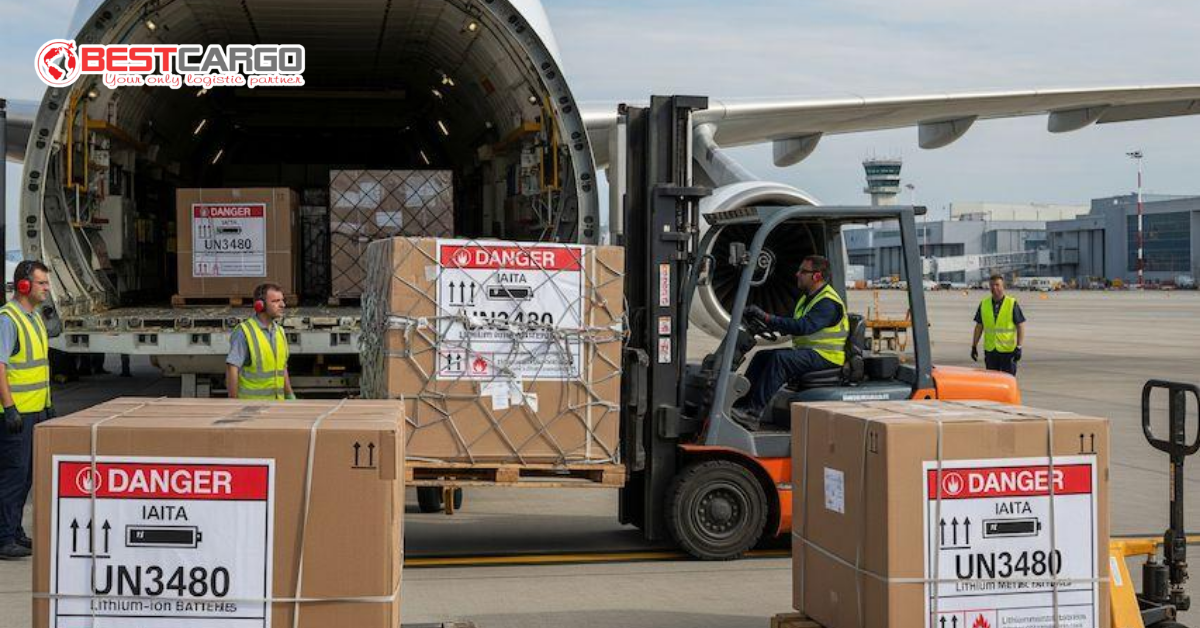
What Is Dimensional Weight?
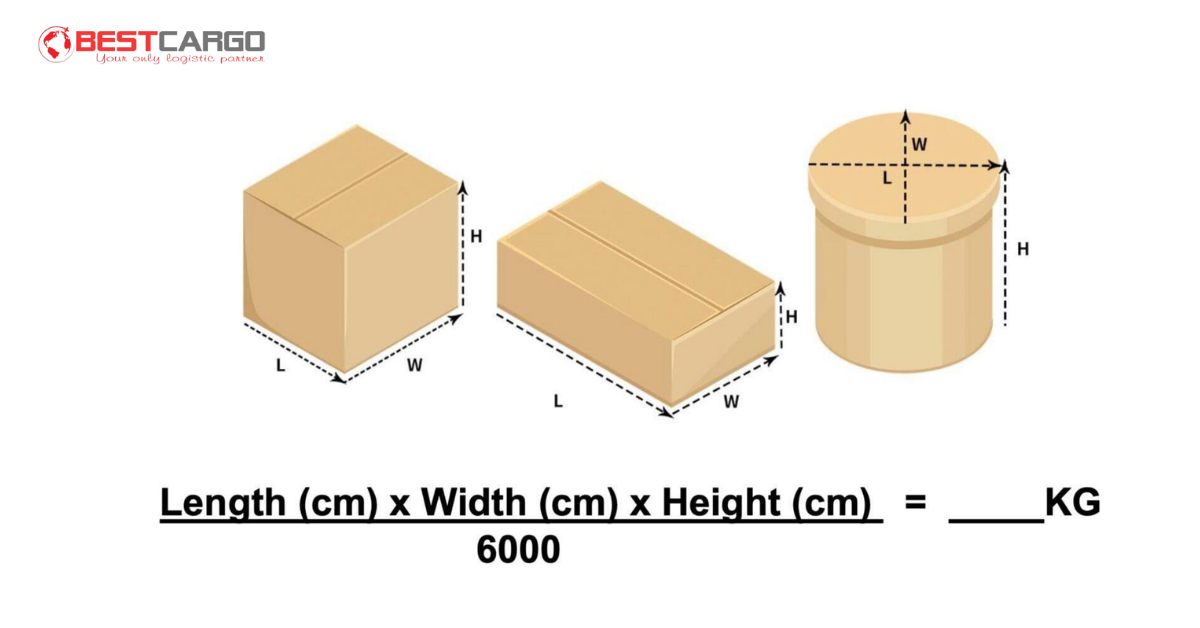
Definition of Dimensional Weight
Dimensional Weight, also known as Volumetric Weight, is a calculated weight based on the volume of a shipment.
It reflects the amount of transportation space occupied by the cargo rather than its actual physical weight.
In air freight, this calculation is important because aircraft have limited cargo space. Carriers need to consider both the weight and volume of shipments when determining available capacity.
Why Is Dimensional Weight Used?
Imagine two shipments:
- Shipment A weighs 50 kg and occupies a small amount of space.
- Shipment B weighs only 20 kg but occupies a much larger space.
Although Shipment B is lighter, it may use more aircraft capacity.
Dimensional Weight helps carriers account for this difference when pricing air freight.
How Is Dimensional Weight Calculated?
A common formula for air freight is:
Dimensional Weight = Length × Width × Height ÷ Dimensional Factor
When dimensions are measured in centimeters, a commonly used dimensional factor is 6,000.
For example, if a shipment measures:
- Length: 100 cm
- Width: 80 cm
- Height: 60 cm
The volume is:
100 × 80 × 60 = 480,000 cm³
Using a dimensional factor of 6,000:
480,000 ÷ 6,000 = 80 kg
Therefore, the dimensional weight is 80 kg.
However, the dimensional factor may vary depending on the carrier, service, route, and applicable pricing rules. Shippers should always confirm the specific factor before calculating the final freight cost.
Dimensional Weight vs. Actual Weight

What Is Actual Weight?
Actual Weight is the physical weight of the shipment measured on a scale.
For example, a package may have an actual weight of 35 kg.
Actual Weight is straightforward because it directly represents the physical mass of the cargo.
What Is Dimensional Weight?
Dimensional Weight is calculated using the dimensions of the shipment.
It represents the estimated weight associated with the space occupied by the cargo.
The two values can therefore be very different.
For example:
- Actual Weight: 35 kg
- Dimensional Weight: 60 kg
In this situation, the shipment occupies more space than its physical weight would suggest.
What Is Chargeable Weight?
The Basis for Air Freight Pricing
Chargeable Weight is the weight used to calculate the freight charge.
In many air freight shipments, the carrier compares:
- Actual Weight
- Dimensional Weight
The higher value is generally used as the Chargeable Weight, subject to the applicable carrier or tariff rules.
For example:
| Weight Type | Result |
|---|---|
| Actual Weight | 35 kg |
| Dimensional Weight | 60 kg |
| Chargeable Weight | 60 kg |
This is why a lightweight but bulky shipment can have a higher freight charge than expected.
Why Dimensional Weight Matters in Air Freight
Aircraft Space Is Limited
An aircraft has both weight and volume limitations.
If carriers calculated freight charges only according to actual weight, very lightweight cargo could occupy a large amount of valuable cargo space without fully reflecting the capacity it consumes.
Dimensional Weight helps create a pricing method that considers the space used by the shipment.
Lightweight and Bulky Cargo
Dimensional Weight is particularly relevant for products such as:
- Clothing.
- Household goods.
- Furniture components.
- Plastic products.
- Foam products.
- Packaging materials.
- Large promotional items.
These products may have relatively low physical weight but occupy significant cargo volume.
A Simple Example
Suppose a company wants to ship one large carton by air.
The carton measures:
120 × 80 × 70 cm
Its actual weight is 50 kg.
First, calculate the volume:
120 × 80 × 70 = 672,000 cm³
Then calculate dimensional weight using a factor of 6,000:
672,000 ÷ 6,000 = 112 kg
The result is:
- Actual Weight = 50 kg
- Dimensional Weight = 112 kg
- Chargeable Weight = 112 kg, assuming the applicable rule uses the higher value.
Although the cargo physically weighs only 50 kg, it occupies enough space to be rated at 112 kg for freight calculation purposes.
How Packaging Affects Dimensional Weight
Oversized Packaging Can Increase Costs
Packaging protects products during transportation, but oversized packaging can increase the shipment’s volume.
Even when the product itself is compact, excessive packaging can significantly increase dimensional weight.
For this reason, businesses should choose packaging that provides sufficient protection without creating unnecessary empty space.
Optimize Package Dimensions
Companies can reduce dimensional weight by:
- Choosing appropriately sized cartons.
- Reducing unnecessary empty space.
- Using lightweight protective materials.
- Improving product arrangement.
- Consolidating compatible shipments when appropriate.
The goal is not simply to reduce packaging material but to use available cargo space more efficiently.
Dimensional Weight and Cargo Density
Dimensional Weight is closely related to Cargo Density.
Cargo density describes the relationship between the weight and volume of a shipment.
Low-density cargo is lightweight relative to its volume. This type of cargo is more likely to have a high dimensional weight compared with its actual weight.
High-density cargo, on the other hand, has more weight relative to the space it occupies.
Understanding cargo density can therefore help businesses predict whether a shipment is likely to be affected by dimensional weight.
Common Mistakes When Calculating Dimensional Weight
Measuring the Product Instead of the Package
One common mistake is using the dimensions of the product rather than the final packaged shipment.
The calculation should normally use the dimensions of the shipment as presented for transportation.
Ignoring Multiple Packages
If a shipment contains several cartons with different dimensions, each package may need to be measured separately according to the applicable carrier rules.
Using only the dimensions of one carton can result in an inaccurate estimate.
Using the Wrong Dimensional Factor
Different carriers and services may apply different dimensional factors.
Therefore, businesses should not assume that one formula applies universally to every air freight shipment.
Forgetting About Actual Weight
Dimensional Weight should not be considered separately from Actual Weight.
The two values need to be compared to determine the applicable Chargeable Weight under the shipment’s pricing conditions.
How Businesses Can Reduce Air Freight Costs
Understanding dimensional weight can help businesses make better shipping decisions.
1. Optimize Packaging
Use packaging that is strong enough to protect the cargo while minimizing unnecessary volume.
2. Measure Before Booking
Measure the final packaged shipment before requesting an air freight quotation.
3. Compare Transportation Options
For very bulky cargo, businesses may consider whether air freight is the most appropriate transportation method.
4. Consolidate Shipments
Where appropriate, shipment consolidation can help improve space utilization and overall logistics efficiency.
5. Confirm Carrier Rules
Always confirm the dimensional factor, minimum chargeable weight, and other pricing conditions with the freight forwarder or carrier.
Frequently Asked Questions
1. What is Dimensional Weight in air freight?
Dimensional Weight is a calculated weight based on the volume of a shipment. It reflects the amount of cargo space used rather than only its physical weight.
2. Is Dimensional Weight the same as Actual Weight?
No. Actual Weight is measured directly on a scale, while Dimensional Weight is calculated from the shipment’s dimensions.
3. Why is Dimensional Weight important?
It allows carriers to account for cargo that occupies significant space despite having relatively low physical weight.
4. What is Chargeable Weight?
Chargeable Weight is the weight used to calculate the freight charge. Depending on the applicable rules, it is commonly based on the higher of Actual Weight and Dimensional Weight.
5. How can I reduce Dimensional Weight?
Businesses can reduce dimensional weight by optimizing packaging, reducing empty space, and selecting appropriately sized cartons.
Conclusion
Dimensional Weight is a fundamental concept in air freight pricing. It allows airlines and freight forwarders to consider not only how much a shipment weighs but also how much valuable cargo space it occupies.
For lightweight and bulky shipments, dimensional weight can be significantly higher than actual weight. This can directly affect the Chargeable Weight and final transportation cost.
By understanding the relationship between Actual Weight, Dimensional Weight, Cargo Density, and Chargeable Weight, businesses can improve packaging, estimate freight costs more accurately, and make better logistics decisions.
Read more:
FIATA World Congress: Global Trends in Freight Forwarding and Logistics
Gửi bột thạch sương sáo từ Hà Nội sang Mỹ
