



Air Waybill (AWB): Everything You Need to Know
Air freight is one of the fastest and most reliable shipping methods for international trade. Whether you are shipping commercial goods or personal cargo, understanding the documents involved is essential. One of the most important documents in air cargo transportation is the Air Waybill (AWB).
An Air Waybill serves as the primary shipping document for air freight. It contains essential shipment details, helps carriers manage cargo, and supports customs clearance. In this guide, you’ll learn everything you need to know about the Air Waybill, including its purpose, key information, different types, and best practices for completing it correctly.
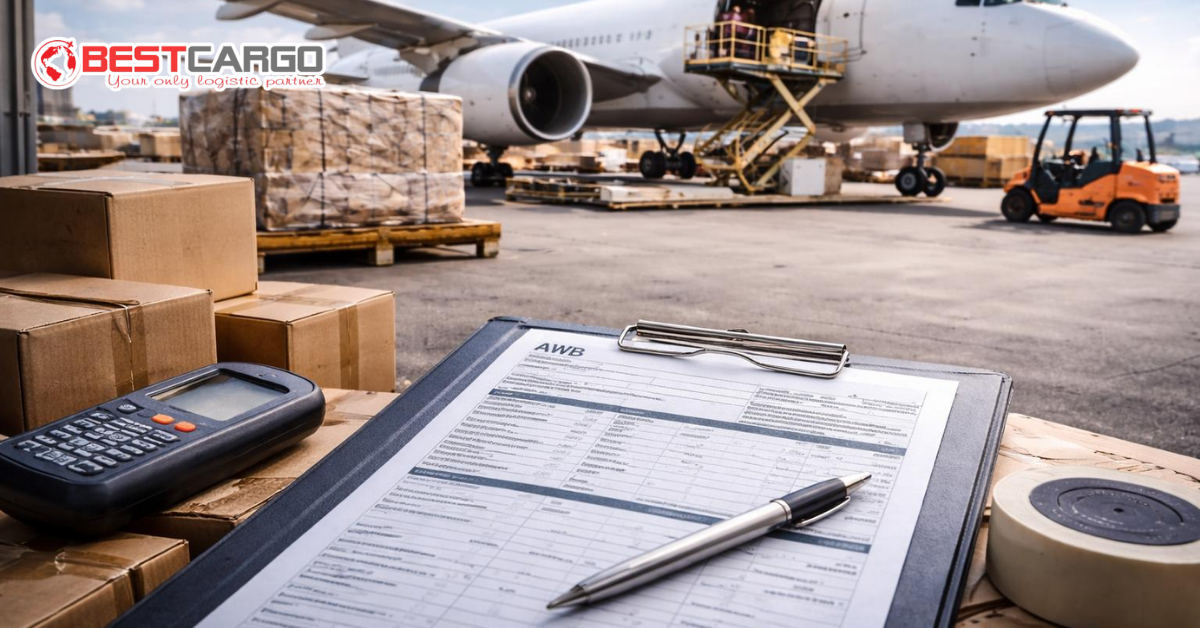
What Is an Air Waybill (AWB)?
An Air Waybill (AWB) is a transport document issued by an airline or an authorized freight forwarder. It confirms that the carrier has received the cargo for transportation and provides detailed information about the shipment.
Unlike a Bill of Lading used in ocean freight, an Air Waybill is non-negotiable. It does not represent ownership of the goods. Instead, it acts as a shipping contract and a receipt between the shipper and the carrier.
Every international air shipment typically requires an AWB to ensure accurate transportation and customs processing.
What Information Does an AWB Include?
An Air Waybill contains important shipment information that allows all parties to identify and track the cargo throughout its journey.
Typical details include:
- Air Waybill number
- Shipper’s name and address
- Consignee’s name and address
- Airline information
- Airport of departure
- Destination airport
- Flight routing
- Number of packages
- Gross weight
- Description of goods
- Freight charges
- Special handling instructions
Providing accurate information helps reduce delays and prevents unnecessary complications during transportation.
Types of Air Waybill
There are two common types of Air Waybills used in international logistics.
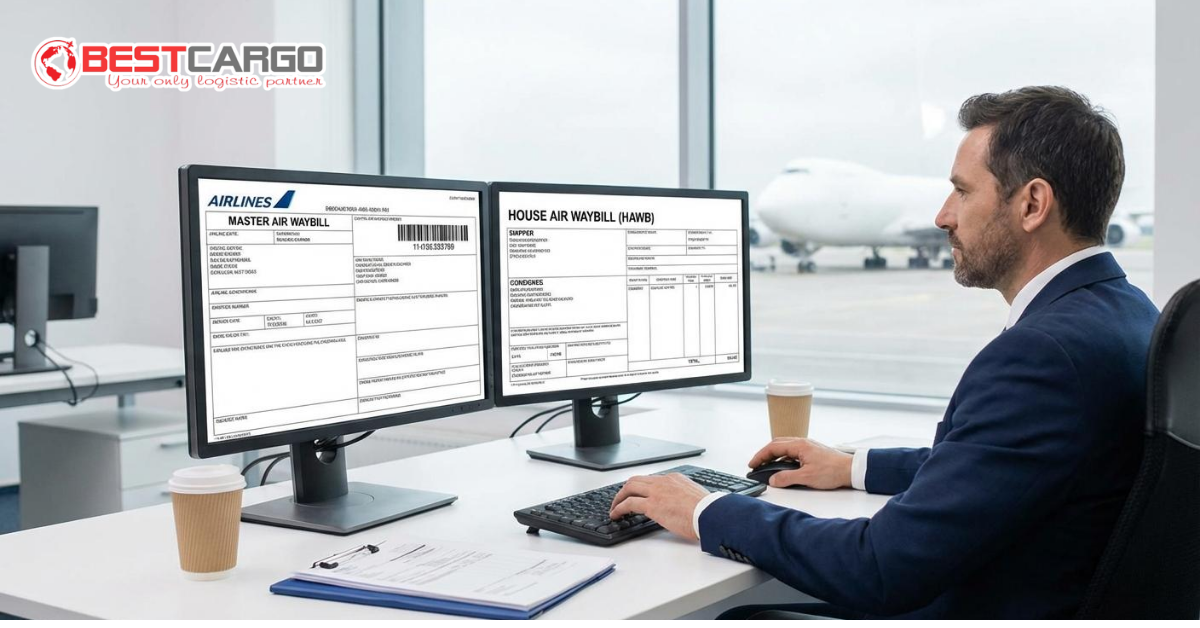
Master Air Waybill (MAWB)
A Master Air Waybill (MAWB) is issued by the airline to a freight forwarder. It covers the shipment transported by the airline and serves as the primary contract between the carrier and the freight forwarder.
MAWBs are commonly used for consolidated cargo shipments.
House Air Waybill (HAWB)
A House Air Waybill (HAWB) is issued by a freight forwarder to its customer. It outlines the shipment details between the shipper and the freight forwarding company.
The HAWB allows freight forwarders to manage multiple customer shipments under one Master Air Waybill.
Why Is an Air Waybill Important?
The Air Waybill plays a critical role throughout the shipping process.
Shipment Tracking
Each AWB has a unique identification number. This number allows customers to track cargo from origin to destination.
Customs Clearance
Customs authorities use the information on the AWB to verify shipment details during import and export procedures.
Proof of Shipment
The Air Waybill confirms that the carrier has accepted the goods for transportation.
Cargo Identification
The document helps airlines and logistics providers identify cargo quickly throughout the supply chain.
Freight Charges
The AWB also records transportation charges and payment information, making billing more efficient.
How to Complete an Air Waybill Correctly
Completing an Air Waybill accurately helps prevent shipping delays and customs issues.
Before submitting an AWB, make sure to:
- Verify shipper and consignee information.
- Use the correct airport codes.
- Describe the goods clearly.
- Confirm the number of packages.
- Declare the correct shipment weight.
- Review all contact information carefully.
Even small errors can lead to shipment delays or additional processing time.
Common Mistakes to Avoid
Many shipping problems result from incorrect or incomplete Air Waybill information.
Some of the most common mistakes include:
- Incorrect consignee details.
- Wrong airport code.
- Missing contact information.
- Incorrect package quantity.
- Inaccurate cargo description.
- Incorrect weight declaration.
- Missing special handling instructions.
Reviewing the document before shipment can significantly reduce these risks.
Best Practices for Air Waybill Management
Businesses that regularly ship by air should establish a standard process for preparing Air Waybills.
Some recommended practices include:
- Keep digital copies of every AWB.
- Double-check shipment information before submission.
- Work with experienced freight forwarders.
- Update shipping records regularly.
- Track shipments using the AWB number.
Following these practices improves shipping efficiency and helps maintain accurate logistics records.
Conclusion
The Air Waybill (AWB) is one of the most important documents in international air freight. It serves as a shipment receipt, transportation contract, cargo identification document, and customs reference.
Understanding how an Air Waybill works can help businesses avoid costly mistakes and improve shipping efficiency. Whether you are shipping small parcels or commercial cargo, preparing an accurate AWB is an essential step toward successful international air transportation.
Frequently Asked Questions
What is an Air Waybill (AWB)?
An Air Waybill is a shipping document issued by an airline or freight forwarder for air cargo transportation.
Is an Air Waybill the same as a Bill of Lading?
No. An Air Waybill is non-negotiable, while a Bill of Lading can represent ownership of goods.
Who issues an Air Waybill?
An airline or an authorized freight forwarder issues the Air Waybill.
Can I track my shipment using an AWB number?
Yes. Most airlines and freight forwarders allow shipment tracking through the unique AWB number.
Is an Air Waybill required for international air freight?
Yes. Most international air cargo shipments require an Air Waybill to support transportation and customs procedures.
Read more:
How Blockchain Could Transform the Logistics Industry
Gửi bột thạch sương sáo từ Hà Nội sang Mỹ
