



What Is an Air Cargo Service Level Agreement (SLA)?
An Air Cargo Service Level Agreement (SLA) is an agreement that defines the service standards, responsibilities, performance targets, and expectations between a logistics provider and its customer. In air freight, an SLA helps businesses understand exactly what level of service they can expect throughout the shipping process.
For exporters and importers, a well-defined Air Cargo SLA can improve shipment visibility, delivery performance, communication, and overall logistics management.
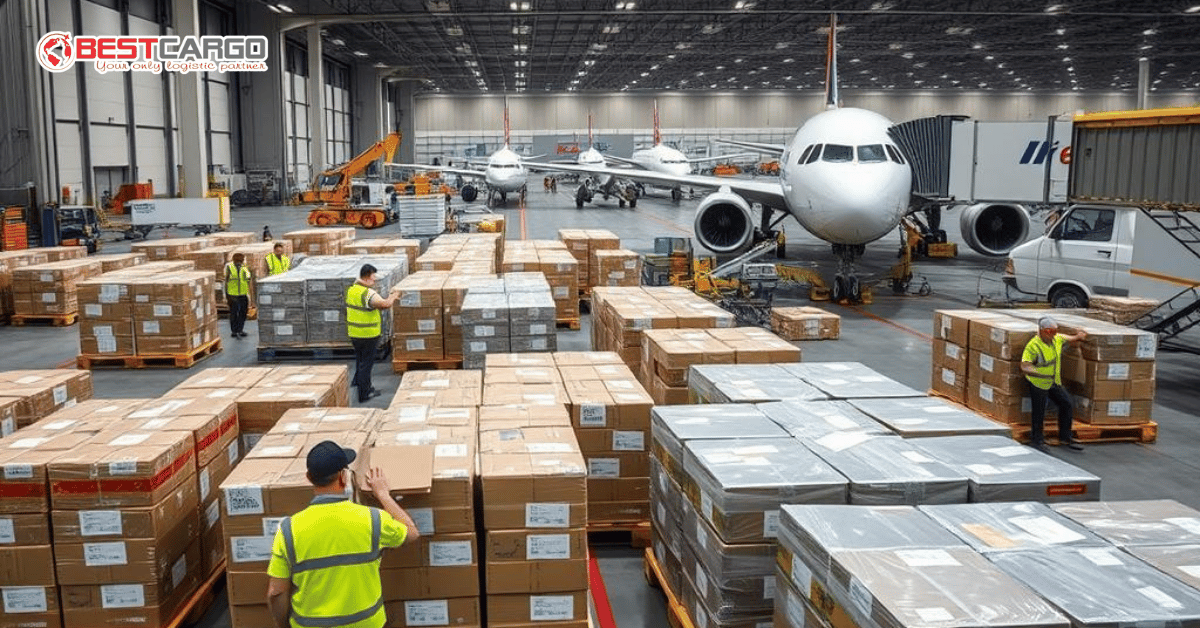
What Is an Air Cargo SLA?
An Air Cargo Service Level Agreement is a formal agreement between two parties involved in logistics services.
The parties may include:
- Exporters and freight forwarders.
- Importers and logistics providers.
- Shippers and airlines.
- E-commerce businesses and logistics companies.
The SLA establishes measurable service standards. These standards help both parties monitor whether the agreed logistics service is being delivered as expected.
Why Is an SLA Important in Air Freight?

Air freight involves multiple parties and time-sensitive operations. A delay at one stage can affect the entire shipment.
An SLA helps businesses:
- Set clear service expectations.
- Monitor shipment performance.
- Improve communication.
- Reduce misunderstandings.
- Identify service problems.
- Measure logistics provider performance.
- Improve supply chain reliability.
For businesses handling frequent international shipments, an SLA can provide greater control over logistics operations.
What Is Usually Included in an Air Cargo SLA?

The exact contents depend on the service and logistics provider. However, a typical SLA may include several important areas.
Transit Time
The agreement may specify an expected transit time between the origin and destination.
For example, a business may require shipments to reach the destination within a defined number of business days.
Shipment Pick-Up Time
The SLA may define when the logistics provider must collect cargo from the shipper.
This is particularly important for time-sensitive shipments.
Booking Confirmation
The agreement can establish how quickly the provider must confirm cargo space after receiving a booking request.
Shipment Tracking
The SLA may specify the frequency and availability of tracking updates.
Customers may expect notifications when cargo is:
- Picked up.
- Accepted at the airport.
- Loaded onto the aircraft.
- Departed.
- Arrived at the destination.
- Released for delivery.
Customs Support
For international shipments, the SLA may define the level of customs documentation and clearance support provided by the logistics company.
Delivery Performance
The agreement can establish delivery targets and procedures for handling delayed shipments.
How Is Air Cargo SLA Performance Measured?
An SLA should use measurable Key Performance Indicators (KPIs).
Common air freight KPIs include:
| KPI | What It Measures |
|---|---|
| On-time pickup | Whether cargo is collected as scheduled |
| Booking confirmation time | How quickly cargo space is confirmed |
| On-time departure | Whether the shipment leaves as planned |
| Transit time | Duration of transportation |
| On-time delivery | Whether cargo reaches the consignee on schedule |
| Tracking accuracy | Quality of shipment status information |
| Claims response time | Speed of handling cargo claims |
| Documentation accuracy | Accuracy of shipping documents |
These KPIs make it easier for businesses to evaluate logistics performance objectively.
Air Cargo SLA vs. Standard Shipping Agreement
An SLA and a standard shipping agreement are not exactly the same.
A standard shipping agreement generally defines the commercial terms and conditions of transportation.
An SLA focuses more specifically on service quality and performance.
For example:
- A shipping agreement may define freight rates.
- An SLA may define the expected booking response time.
- A shipping agreement may define liability conditions.
- An SLA may define the target delivery performance.
In many logistics relationships, both documents can work together.
Benefits of Using an Air Cargo SLA
A well-designed SLA can provide several benefits.
Better Service Quality
Clear performance standards encourage logistics providers to maintain consistent service levels.
Greater Transparency
Both parties understand their responsibilities and expected performance.
Easier Performance Evaluation
Businesses can use KPIs to compare actual results with agreed targets.
Faster Problem Resolution
The SLA can define escalation procedures when service problems occur.
Better Cost Control
Clear service requirements can help businesses understand what services are included and which additional services may generate extra charges.
Stronger Business Relationships
Transparent expectations can improve trust between shippers and logistics providers.
What Happens When SLA Targets Are Not Met?
An SLA should explain what happens when agreed performance targets are missed.
Possible procedures include:
- Investigation of the service failure.
- Corrective action plans.
- Escalation to management.
- Service reviews.
- Performance improvement measures.
- Compensation or service credits when specifically agreed.
However, not every delay automatically creates a compensation obligation. The exact consequences depend on the terms of the SLA and the underlying transportation contract.
How to Create an Effective Air Cargo SLA
Businesses should make their SLA specific and measurable.
Important steps include:
- Define the required logistics services.
- Establish realistic performance targets.
- Select measurable KPIs.
- Define reporting requirements.
- Establish escalation procedures.
- Clarify responsibilities for both parties.
- Define exceptions such as weather, flight cancellations, customs inspections, and force majeure events.
- Review performance regularly.
A practical SLA should reflect the actual requirements of the business rather than using generic targets.
Frequently Asked Questions
1. What is an Air Cargo SLA?
An Air Cargo SLA is an agreement that defines service standards, responsibilities, performance targets, and expectations for air freight services.
2. Why is an SLA important for air freight?
It helps businesses monitor logistics performance, improve transparency, and establish clear expectations with their logistics providers.
3. What KPIs are commonly included?
Common KPIs include on-time pickup, booking confirmation time, transit time, on-time delivery, tracking accuracy, and documentation accuracy.
4. Does an SLA guarantee delivery time?
Not necessarily. An SLA normally defines a target or agreed service standard. Actual delivery may be affected by customs, weather, flight disruptions, security procedures, or other events.
5. Can an SLA include compensation?
Yes. The parties can agree on service credits, compensation, or other remedies, subject to the terms of the contract and applicable conditions.
Conclusion
An Air Cargo Service Level Agreement (SLA) provides a structured way for businesses and logistics providers to define and measure air freight service performance. By establishing clear KPIs, responsibilities, reporting procedures, and escalation processes, an SLA can improve shipment visibility, delivery reliability, and logistics efficiency.
For companies with frequent or time-sensitive air cargo shipments, a well-designed SLA can become an important tool for managing logistics performance and building stronger long-term relationships with freight partners.
Read more:
Southeast Asia Emerges as Asia’s New Logistics Hub
Gửi bột thạch sương sáo từ Hà Nội sang Mỹ
