



Air Cargo Breakdown: The Process of Unloading Cargo from ULDs
In air freight operations, cargo handling requires careful coordination. Every shipment must be unloaded and transferred safely. Air Cargo Breakdown is an important process in airport cargo handling. It involves removing cargo from Unit Load Devices (ULDs) after aircraft arrival. Proper breakdown helps maintain cargo condition and ensures accurate shipment distribution.

What Is Air Cargo Breakdown?
Air Cargo Breakdown refers to the process of unloading cargo from ULDs. It usually takes place after an aircraft arrives at the airport. Ground handling staff perform this task at designated cargo facilities.
During breakdown, workers remove cargo from aircraft pallets or containers. They then sort and transfer shipments to designated storage areas. Each shipment is checked against its handling information.
This process helps prepare cargo for customs clearance and final delivery. It also supports accurate warehouse inventory management.
Why Is Air Cargo Breakdown Important?

1. Ensuring Accurate Cargo Handling
Breakdown allows staff to identify and separate individual shipments. They can verify package quantities and shipment details. This helps reduce handling errors.
2. Protecting Cargo from Damage
Incorrect unloading can damage goods and packaging. Proper handling reduces the risk of impact or compression. This is especially important for fragile shipments.
3. Supporting Warehouse Operations
Cargo must be sorted after removal from ULDs. Staff transfer shipments to appropriate storage locations. This makes warehouse operations more organized.
4. Preparing Cargo for Customs Clearance
After breakdown, shipments can proceed through the next handling stages. Relevant documents and cargo information are checked. This supports customs inspection and cargo release.
The Air Cargo Breakdown Process
The breakdown process may vary between airports and handling agents. However, most operations follow these basic steps.
Step 1: Aircraft Arrival and ULD Unloading
After landing, ground handling teams unload ULDs from the aircraft. They transport them to designated cargo handling areas. Each ULD must be handled according to operational procedures.
Step 2: ULD Identification and Verification
Staff check ULD identification numbers and shipment information. They compare these details with the relevant cargo records. This helps confirm that the correct units have arrived.
Step 3: Cargo Removal
Workers remove individual packages from pallets or containers. They must follow proper handling instructions. Special attention is required for fragile and sensitive cargo.
Step 4: Cargo Sorting and Segregation
After removal, shipments are separated by destination and handling requirements. Staff place them in designated warehouse areas. Special cargo may require additional handling procedures.
Step 5: Cargo Inspection and Quantity Check
Staff check package quantities and external conditions. They look for damaged packaging or missing pieces. Any irregularities should be recorded and reported.
Step 6: Warehouse Storage and Handover
After verification, cargo is transferred to designated storage areas. Shipments may wait for customs clearance or collection. The handling team updates relevant warehouse records.
Common Risks During Air Cargo Breakdown
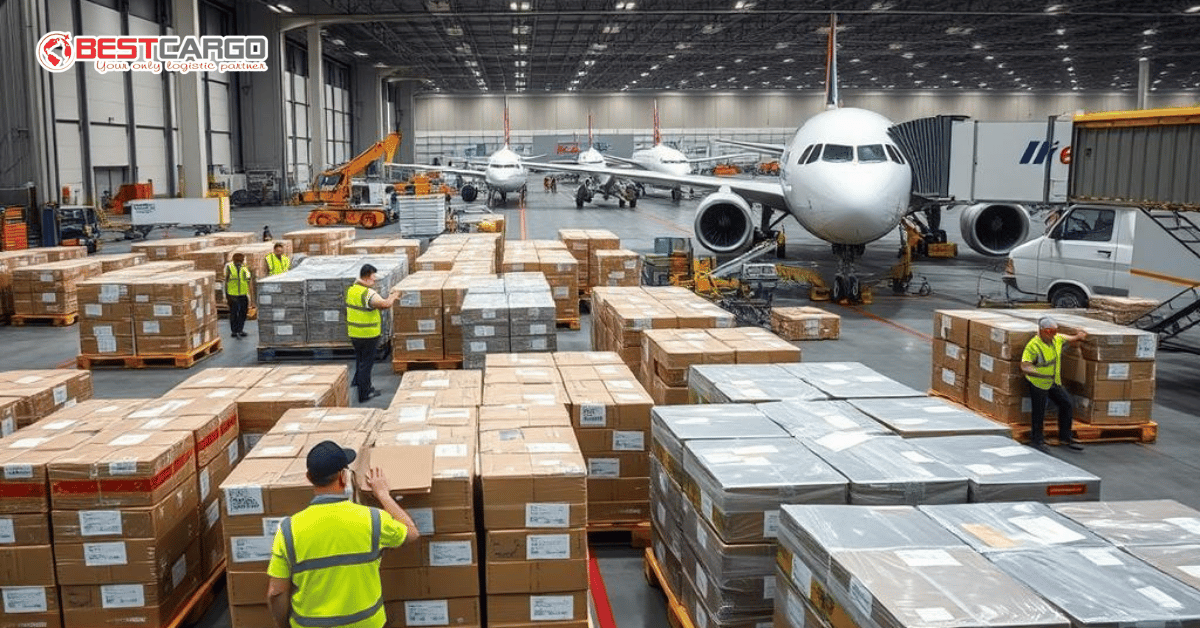
Cargo breakdown involves several operational risks. Poor handling can affect both shipment quality and delivery schedules.
- Cargo Damage: Incorrect unloading may cause scratches, dents, or broken packaging.
- Missing Packages: Poor identification can lead to misplaced or missing shipments.
- Incorrect Sorting: Shipments may be transferred to the wrong storage area.
- Handling Delays: Inefficient operations can increase warehouse processing time.
- Documentation Errors: Incorrect records may create discrepancies between physical cargo and shipment documents.
- Safety Hazards: Improper equipment use can create risks for warehouse personnel.
Best Practices for Efficient Air Cargo Breakdown
Airlines and ground handling agents should follow clear operational procedures. These practices help improve efficiency and reduce handling risks.
1. Use Appropriate Handling Equipment
Equipment must match the cargo type and handling requirements. Forklifts and cargo handling systems should be operated by trained staff.
2. Verify Shipment Information
Staff should check ULD numbers and cargo records. Accurate identification helps prevent sorting mistakes.
3. Follow Cargo Handling Instructions
Different shipments require different handling methods. Fragile, valuable, and temperature-sensitive goods need special attention.
4. Maintain Proper Warehouse Organization
Cargo should be placed in clearly designated areas. Proper storage reduces confusion and handling time.
5. Record Damage and Discrepancies
Any damage or quantity difference must be documented. Prompt reporting helps relevant parties investigate the issue.
6. Train Ground Handling Personnel
Employees should understand unloading procedures and safety requirements. Regular training can improve operational performance.
Air Cargo Breakdown vs. Air Cargo Build-up
Air Cargo Breakdown and Air Cargo Build-up are two related warehouse operations. However, they serve different purposes.
| Criteria | Air Cargo Breakdown | Air Cargo Build-up |
|---|---|---|
| Main purpose | Remove cargo from ULDs | Arrange cargo onto ULDs |
| Operation stage | After aircraft arrival | Before aircraft departure |
| Main activity | Unloading and sorting | Consolidation and loading preparation |
| Cargo direction | ULD to warehouse | Warehouse to ULD |
| Key objective | Accurate cargo distribution | Safe and efficient aircraft loading |
Both processes are essential to airport cargo operations. Proper coordination helps maintain cargo flow and operational efficiency.
FAQs – Frequently Asked Questions About Air Cargo Breakdown
1. What Is Air Cargo Breakdown?
Air Cargo Breakdown is the process of removing shipments from ULDs. It usually takes place after aircraft arrival.
2. Who Is Responsible for Cargo Breakdown?
Ground handling agents usually perform this operation. Warehouse personnel also support cargo identification and sorting.
3. What Is a ULD in Air Cargo?
ULD stands for Unit Load Device. It refers to aircraft pallets and containers used to transport cargo.
4. What Happens After Cargo Breakdown?
Shipments are sorted and transferred to designated warehouse areas. They may then proceed to customs clearance or cargo collection.
5. What Are the Main Risks During Cargo Breakdown?
Common risks include cargo damage and missing packages. Incorrect sorting and operational delays can also occur.
Conclusion
Air Cargo Breakdown is a key process in airport cargo operations. It ensures shipments are removed and sorted correctly after arrival.
Proper procedures help reduce cargo damage and handling errors. They also support efficient warehouse management.
For freight forwarders and logistics companies, understanding this process is important. Effective coordination with ground handling agents helps ensure smooth cargo delivery.
Read more:
Southeast Asia Emerges as Asia’s New Logistics Hub
Gửi bột thạch sương sáo từ Hà Nội sang Mỹ
